
Worship
Worship is best described by the German word Gottesdienst, often translated into English as God’s (Divine) Service. Properly understood, the phrase God’s Service can and does apply both ways, both from God and to God. Nevertheless, there is a proper order to this service.
GOD SPEAKS: As we learn in Matthew 20:28, “...the Son of Man came not to be served but to serve, and to give his life as a ransom for many.” He is the servant God, coming into our midst during worship to serve us His gifts of faith and the forgiveness of sins through Word and Sacrament. In this way, worship is first and foremost sacramental. He speaks, we listen; he gives, we receive. He offers us through His Word the very breath of life that we inhale in the Divine Service.
WE RESPOND: Only after hearing of and receiving his abundant gifts of grace, mercy, and peace are we able to exhale our response of prayer, praise, and thanksgiving in both word and song. As we learn in 1 John 4:19, “We love because he first loved us.” We offer this sacrifice of praise only as a joyful response to His wonderful works of justification and sanctification already done for us and in us. As the Psalmist wrote, “O Lord, open my lips and my mouth will declare Your praise.” (Psalm 51:15) Even in this act of sacrificial praise, the Lord is the one acting, loosing our lips from the bondage of the evil one to the glorification of His holy name.
To be clear, while part of worship can be understood as a sacrifice, it is only a eucharistic sacrifice, or an offering of thanks and praise in response to Christ’s true propitiatory sacrifice on the cross. Only His sacrifice merited for us the forgiveness of sins and reconciliation with God; our praise amounts to nothing more than filthy rags (Is. 64:6), except that they have been sanctified through faith in God’s saving work in us.
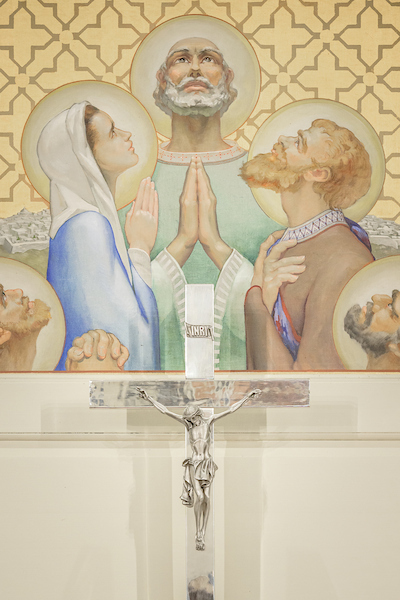
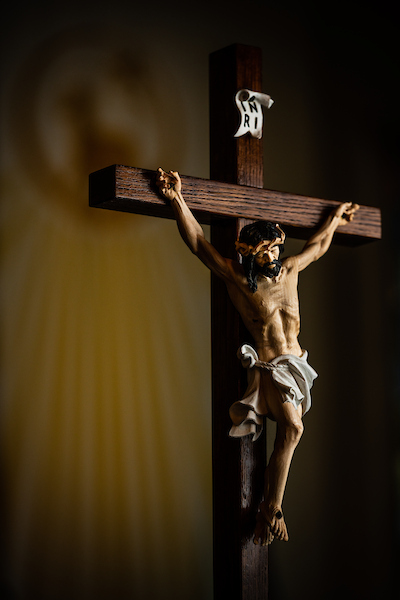
THE GOD WHO SERVES: God’s service of both Word and Sacrament is known as liturgy, or God’s “work for the people.” To deliver, order, and protect this λειτουργία, this liturgy, the church over its history has developed rites and ceremonies – rites to faithfully distribute the gifts of the liturgy, and ceremonies that point us to Christ and His mercies offered in the liturgy, neither obscuring nor distracting us from those glorious gifts. Though not all, many of the church’s historic rites are derived directly from the words of Holy Scripture, while its traditional ceremonies have developed to teach the faith through the activity of reverent worship.
While some may view these rites and ceremonies as outdated and stodgy, they are true treasures that have facilitated the giving of God’s gifts to generations of believers, many even with their origins dating to the time of the apostles and even into the Old Testament. These rites and ceremonies continue to bless God’s people still today. Consider two traditional prayers of the church: the Hebrew Berakhah - Blessed be the Lord God! - and the Greek Kyrie Eleison - Lord, have mercy! Each of these biblical prayers are simple yet profoundly comprehensive. While we do regularly add our own petitions to these prayers, we also recognize their richness by themselves and have incorporated both of them into the prayers of the church for millenia.
HYMNODY: Also, consider the church’s song. The Lutheran church, as many have said, is a singing church. We use hymns to pray to God, to praise Him, and to instruct in doctrine, but perhaps the primary purpose for music in worship is to proclaim to others the boundless love God has shown the whole world in the person of Jesus Christ. As the Reverend Dr. John Kleinig once said, “Our song of praise then, is the corporate proclamation of the gospel by the congregation in the very presence of the living God.” Hymns have played an important role in the church’s rites and ceremonies throughout its history, but especially since the time of the Reformation, and continue to do so even today.
HISTORIC CHRIST-CENTERED WORSHIP: The church has valued these rites and ceremonies for centuries, many even since its inception two millennia ago, but why? The short answer is that they aren’t in and of themselves valuable; they are only beneficial insofar as they point us to Christ. We thank God that they have done just that and continue to do so still today. Additionally, the church has long held fast to the ancient Christian principle of “lex orandi, lex credendi,” or “the law of prayer, the law of belief.” We firmly believe that the rites and ceremonies used in worship affect our beliefs, and our beliefs can and do affect the ways in which we pray and worship. When we speak the very words of God back to Him in our prayers and our rites, then we have confidence that He hears them and that they are well-pleasing to Him. And those rites then continue to shape our beliefs by pointing us back to Christ and His saving Word.
MARKS OF THE CHURCH: The liturgy, rightly understood to be not the specific rites and ceremonies but rather the gifts of Word and Sacrament, is not optional but rather is divinely mandated by God. In fact, so profoundly important are the gifts found in the liturgy themselves that they are the very marks of the church, without which the church would not exist.
EXTRA NOS (OUTSIDE OF US): So we find ourselves back at the original question about worship: What does this mean? Put simply, Lutheran worship turns us not inward to our own navel-gazing selves and our own paltry works; instead, Lutheran worship turns us outward. It orients us toward the One who came to serve us in His death on the cross – and the One who continues to come to us still today and serve us in both Word and Sacrament.
And to that we respond as we often do in many of our worship rites and ceremonies with a hearty, “Thanks be to God!”